Choosing a frame material is not a contest between “good” and “bad.” It is a design decision shaped by the opening size, orientation, acoustic exposure, maintenance expectations and the character of your Barcelona property.
PVC and thermally broken aluminum can both deliver excellent performance when the glazing, seals, hardware and installation are specified as a complete system. This guide explains where each material tends to excel and where the other may be the more rational investment.

Performance values vary by profile series and glazing package. Compare certified whole-window U-values not frame material in isolation.
Two capable materials, with different strengths
PVC
Comfort-led efficiency

Multi-chamber profiles naturally limit heat transfer. They are often the most cost-efficient route to strong thermal and acoustic performance in standard residential openings.
Aluminum
Slim structural precision

A thermally broken frame combines strength with narrow sightlines. It is particularly useful for large spans, dark finishes and architecturally demanding façades.
Modern PVC is reinforced and available in sophisticated finishes; modern aluminum uses polyamide thermal breaks to control conductivity. Neither should be judged by older single-chamber PVC or unbroken metal frames still found across the city.
Thermal and acoustic insulation in Barcelona’s climate
For most apartment-sized openings, a high-quality PVC frame can achieve lower U-values at a lower specification cost. This helps stabilise rooms during humid winters and reduces air-conditioning loads through long summer afternoons.
Acoustic comfort depends more on laminated glass thickness, asymmetrical panes, airtight installation and shutter-box detailing than on frame material alone. On the Eixample’s busy streets, ask for a complete tested acoustic assembly.
Durability and maintenance near sun, salt and city dust
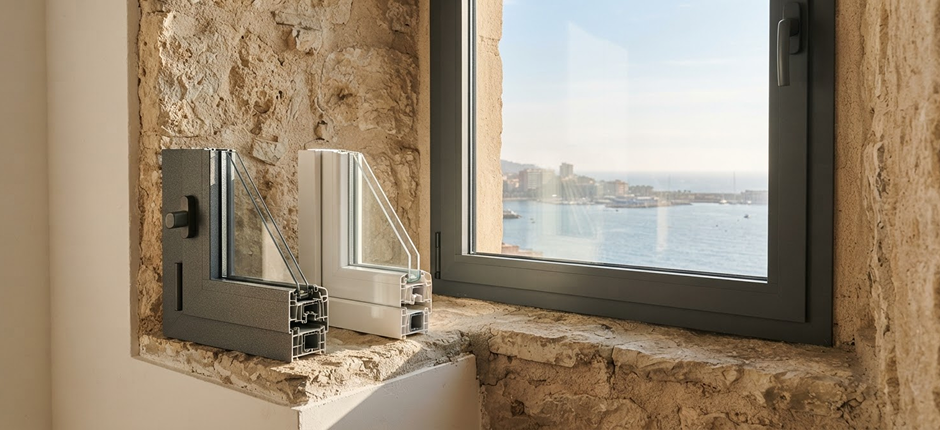
Powder-coated aluminum is exceptionally stable under intense UV exposure and is the stronger choice for oversized leaves, roof terraces and exposed coastal elevations. Quality finishes should be specified for the site’s corrosion category, especially near the sea.
PVC does not corrode and needs little more than gentle cleaning and periodic hardware lubrication. Dark foils on highly exposed south- or west-facing openings require a profile approved for heat build-up; white or pale finishes remain the most forgiving.
For either material, longevity starts with the installation
Clean drainage channels and seals twice a year.
Adjust hinges and locking points when operation becomes resistant.
Use neutral cleaners; avoid abrasive products on frames and gaskets.
“The best frame is the one that solves the dominant constraint: PVC often leads on compact comfort; aluminum often leads on span and sightline. The glass and installation make the result complete.”
— Ecoven Technical Design Team, Barcelona
Design flexibility and structural performance
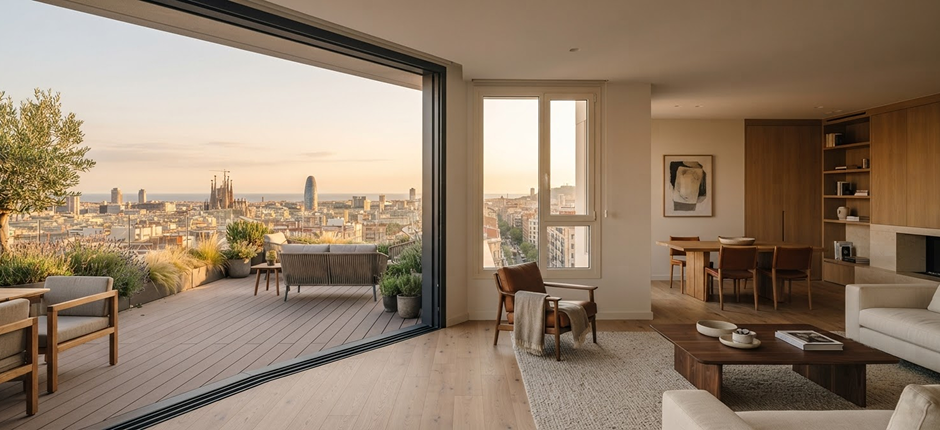
Aluminum’s stiffness permits taller doors, wider sliding panels and narrower visible frames. Its crisp profiles suit contemporary renovations and can carry large glazed units with fewer visual interruptions. Powder coating also offers precise colour matching—from soft bronze to deep graphite.
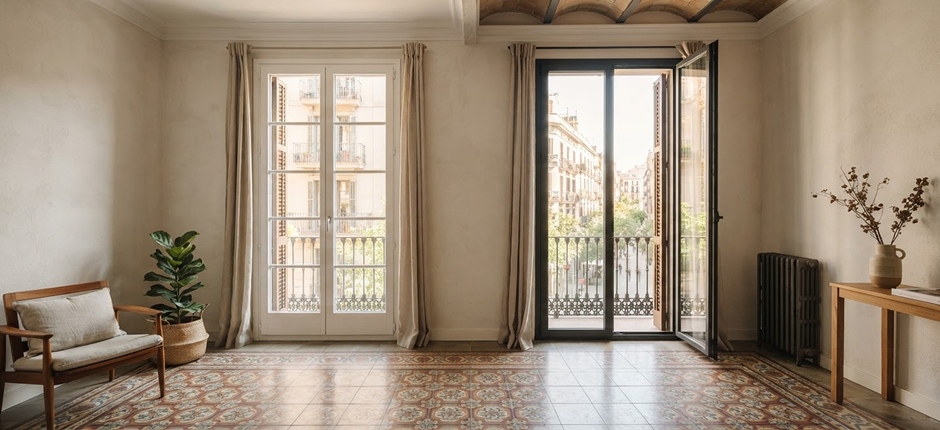
PVC profiles are broader, but that visual weight can feel appropriate in traditional rooms and standard balcony openings. Foils now reproduce wood and dark tones convincingly, while tilt-turn configurations provide excellent ventilation and security.
Choose PVC when…
Openings are conventional

Your priorities are comfort, airtightness and cost control, with standard-sized casement or tilt-turn windows.
Choose aluminum when…
Structure drives the brief

You want minimal sightlines, very large sliders, dark architectural colour or demanding wind-load performance.
Upfront cost and long-term value
PVC is usually the lower initial investment for equivalent residential sizes and insulation targets. Aluminum pricing rises with premium thermal breaks, special finishes and the engineering required for large panes—but those costs may unlock layouts PVC cannot deliver elegantly.
Typically lower entry cost
PVC rewards efficiency-first budgets
Best value is often found in high-performance mid-range systems rather than the cheapest profile. Reinforcement, hardware and fitting quality remain essential.
Typically higher entry cost
Aluminum rewards design-led investment
Long service life, colour stability and structural capacity support value where broad openings and premium architecture are central to the property.
Compare quotes using the same glass, opening style, hardware, removal work and installation method. A low headline price can conceal weaker glazing or incomplete perimeter sealing.
Practical recommendations by property type
Barcelona’s building stock is varied, so a mixed-material specification is often the most intelligent answer. Use each material where its strengths create genuine value.

Eixample apartment
Often PVC or mixed
Prioritise airtightness and acoustic laminated glass for street-facing rooms. Aluminum may suit wide gallery doors; PVC is highly effective for bedrooms and courtyards.

Coastal flat or exposed terrace
Often aluminum
Specify marine-appropriate powder coating, corrosion-resistant hardware and verified wind-load performance. PVC remains viable for protected, standard openings.

Historic renovation
Case by case
Respect façade proportions, community rules and heritage requirements. Slim aluminum can preserve sightlines; wood-effect or pale PVC can suit quieter secondary elevations.

New-build villa
Strategic mix
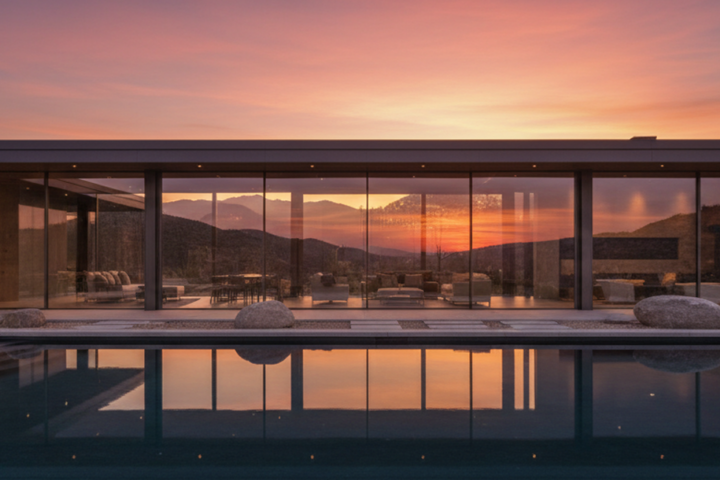
Use aluminum for panoramic sliders and corner glazing; use high-performance PVC in private rooms where thermal efficiency and value matter most.

Rental or budget-led refurbishment
Often PVC
A robust white PVC system offers predictable comfort and low care. Invest in installation, seals and glass before decorative upgrades.